Table of Contents
ToggleChoosing the right carpet for your living room is one of the most impactful decisions you’ll make during a renovation. It anchors your entire design, affects how comfortable your space feels underfoot, and sets the tone for everything else in the room. Whether you’re replacing worn-out flooring or starting fresh in a new home, the carpet you pick will live with you for years, so it’s worth getting it right. This guide walks you through the best living room carpet ideas for 2026, covering everything from color selection and material durability to budget-friendly options that don’t sacrifice style.
Key Takeaways
- Living room carpet ideas for 2026 range from classic neutral tones that hide wear and maintain flexibility to bold patterned designs that make powerful design statements.
- Neutral carpets in grays, beiges, and taupes remain the smartest choice because they complement any décor style, hide stains and pet hair, and appeal to future homebuyers.
- Textured carpet options like Frieze, Berber, and Saxony add visual depth and comfort while hiding footprints better than smooth piles.
- Warm-toned carpets work best in north-facing rooms, while cooler grays and soft blues suit south-facing spaces with golden light.
- Quality material and professional installation matter more than base price—nylon offers the best durability-to-cost ratio, while wool provides premium feel and longevity for lighter-traffic spaces.
- Budget-conscious homeowners can save significantly by shopping sales, comparing installers, choosing patterned finishes that hide wear, or exploring affordable carpet tile options.
Classic Neutral Tones That Never Go Out of Style
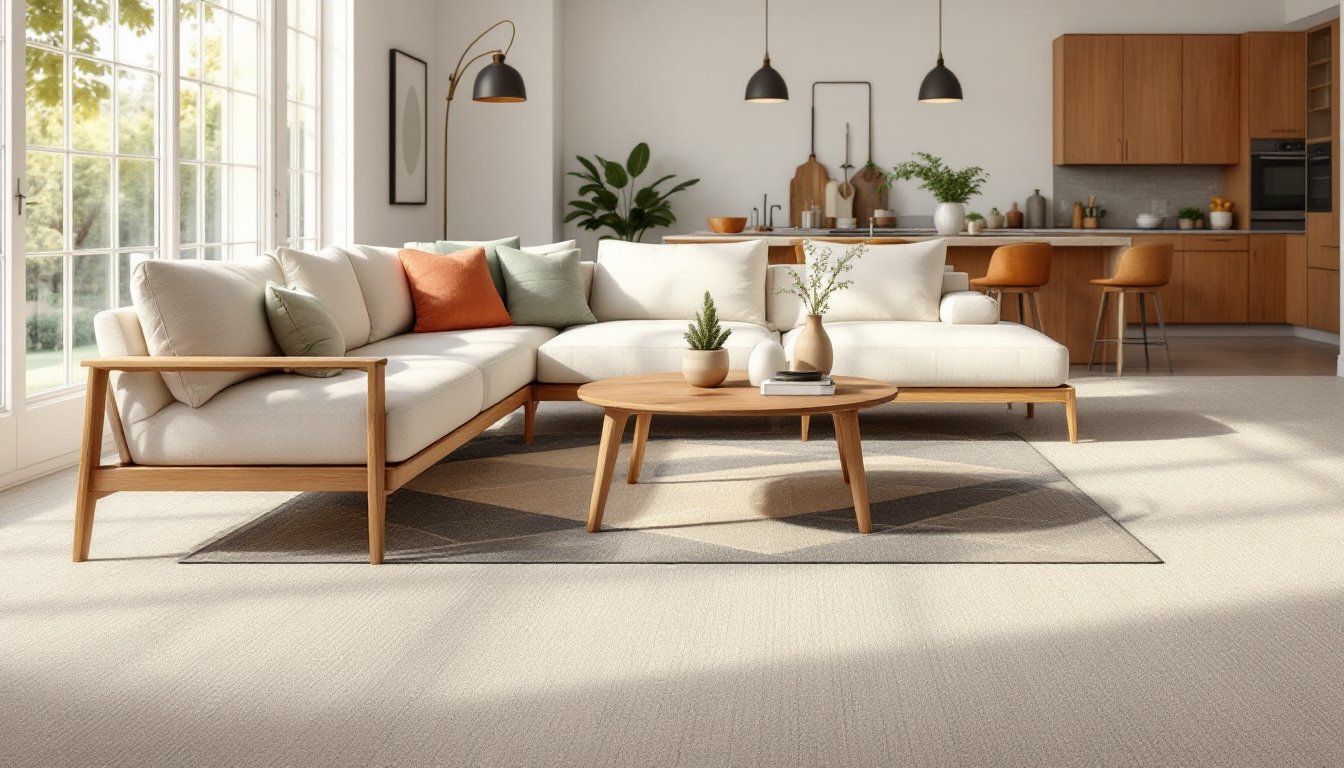
Neutral carpets remain the safest, smartest choice for most living rooms. Think grays, beiges, warm whites, and soft taupes, shades that complement any furniture arrangement and work with both modern and traditional décor. These colors absorb less light and heat, keeping your room feeling open and inviting, while also hiding everyday wear better than lighter shades.
The real advantage of neutrals is flexibility. You can swap out throw pillows, art, and accent pieces without worrying about clashing with your carpet. If you ever sell your home, neutral flooring appeals to a broader buyer pool than bold or trendy colors. Dark grays have become increasingly popular because they’re practical, they hide pet hair and stains, while still feeling contemporary. A warm beige works beautifully in traditional or farmhouse-style living rooms and pairs well with wood furnishings.
One practical tip: grab multiple carpet samples and view them in your living room at different times of day. Natural light changes how a color reads, and that neutral you loved in the showroom might look too pink or too yellow once it’s in your actual space. Spend a few days with samples taped to your floor before committing.
Bold Patterned Carpets for Visual Impact
If your living room has good bones and solid furniture, a patterned carpet can become your design statement piece. Geometric patterns, abstract designs, and subtle florals are all trending for 2026. The key is balance, go bold with the carpet and keep walls and larger furniture relatively neutral, or you’ll overwhelm the space.
Patterned carpets work especially well in open-concept living areas because they visually define and separate zones without walls. They also offer a practical bonus: patterns mask spills and footprints far better than solids, making them ideal for households with kids or pets. Look for patterns with multiple colors that coordinate with at least two accent colors in your room, this creates cohesion rather than chaos.
Modern Geometric Designs
Geometric patterns, from chevrons and hexagons to bold stripes, dominate contemporary living room design. These patterns feel fresher and more modern than traditional damasks or florals, and they work in virtually any size living room. A large-scale geometric pattern can make a smaller room feel intentional rather than cramped, while smaller repeated patterns suit larger spaces.
When selecting a geometric carpet, consider the color palette carefully. A charcoal-and-white geometric works in minimalist or Scandinavian spaces, while a geometric featuring jewel tones (deep blues, emerald greens, rich grays) adds sophistication to eclectic or transitional living rooms. Browse interior design inspiration to see how designers layer geometric patterns with other décor elements. Installation is the same as any carpet, hire a professional installer to ensure seams are minimal and the pattern alignment looks intentional.
Texture-Rich Carpet Options for Depth and Comfort
Textured carpets add visual interest and a cozy, sophisticated feel that flat or smooth piles can’t match. Frieze, Berber, and saxony cuts all deliver different tactile experiences and visual effects. Frieze has a twisted yarn that creates a slightly crimped, informal look, ideal for casual or family-friendly living rooms. Berber offers a looped pile with subtle nubs, providing durability and a more contemporary appearance. Saxony delivers the traditional plush feel most people imagine when they think “soft carpet.”
The texture itself influences how the carpet catches light and hides footprints. A textured weave shows less vacuum marks than a smooth pile, which matters if you’re particular about keeping your living room looking pristine between cleanings. Texture also affects durability, looped piles like Berber resist crushing better than cut piles, making them smarter for high-traffic areas. That said, cut piles feel softer underfoot, which many homeowners prioritize in a living room where people spend hours sitting and lounging.
Consider texture as part of your overall design narrative. A textured neutral pairs beautifully with natural wood, warm metals, and organic materials. Light textured carpets work well in spaces that get plenty of sunlight, while deeper-toned textured options add warmth and intimacy to living rooms with less natural light. The variety of modern décor styles means textured options suit everything from industrial to cozy transitional aesthetics.
Color Trends and How to Choose the Right Shade for Your Space
Beyond neutrals and bold patterns, specific color families are trending in 2026. Warm undertones, terracottas, honey, and sage greens, bring comfort and coziness, while cooler grays and soft blues feel fresh and calming. Choosing the right shade depends on three factors: your home’s natural light, the dominant colors in adjoining rooms, and the mood you want to create.
North-facing rooms receive cooler, bluer light, so warm-toned carpets can look washed out, opt for richer, warmer shades or true grays instead. South-facing living rooms get warm, golden light, which means warm carpet tones will feel even warmer: cooler grays and soft blues work better here to avoid overheating the space visually. If your living room opens to a kitchen with warm wood cabinets, a carpet that echoes those warm tones creates flow. If it opens to a modern kitchen with cool whites and stainless steel, cooler carpet shades maintain continuity.
Remember that paint colors, furniture fabrics, and even curtains change how a carpet shade appears. Before installing, commit to keeping large samples in your living room for at least a week. Test them under different lighting conditions and alongside your existing furniture. The modern home design resources available online can help you visualize color combinations before making final decisions. Many carpet retailers will also install samples on a small section of your living room floor so you can see the true effect.
Practical Considerations: Material, Durability, and Maintenance
Carpet material directly impacts lifespan, feel, and maintenance requirements. The most common residential fibers are nylon, polyester, and wool, each with distinct advantages and trade-offs.
Nylon is the workhorse of residential carpet. It’s incredibly durable, resists crushing and staining, and handles foot traffic beautifully. Nylon cost sits in the mid-range, making it a smart choice for living rooms where comfort and durability matter equally. Expect 10-15 years of life from quality nylon carpet with standard care.
Polyester is softer and less expensive than nylon, offering a luxurious feel at a budget-friendly price point. It resists water-based stains and fading from sunlight. But, polyester crushes more easily than nylon and shows footprints and vacuum lines more readily. It’s best for living rooms with moderate foot traffic.
Wool is the premium option. It’s naturally stain-resistant, feels incredibly soft, and has superior insulation properties that keep feet warm. Wool lasts 20+ years and develops a beautiful aged patina. The downside is cost, wool carpets run 2-3 times more than nylon, and they require professional cleaning and careful maintenance. Wool is ideal for living rooms in cooler climates or homes where traffic is light to moderate.
Regardless of material, proper installation matters enormously. Hire a licensed carpet installer who uses a power stretcher (not a knee kicker) to eliminate wrinkles and seams that will show prematurely. Plan for padding beneath the carpet, a quality 7mm to 9mm density pad extends carpet life and improves comfort underfoot. Budget roughly 20-30% of your carpet cost for padding and installation.
Maintenance habits determine how long your carpet truly lasts. Vacuum high-traffic areas twice weekly and the entire living room once weekly. Clean spills immediately with cool water and a white cloth, heat can set stains. Professional cleaning every 12-18 months removes embedded dirt and extends carpet life significantly.
Budget-Friendly Carpet Solutions for Any Homeowner
Not everyone has unlimited funds for carpet replacement, and that’s completely fine. Budget options exist at every quality level, and smart shopping can stretch your dollar significantly.
Start by setting a realistic price ceiling. Basic polyester or lower-grade nylon runs $2-4 per square foot installed, while quality nylon or polyester blends cost $5-8 per square foot. Wool sits $10-15+ per square foot, and those costs don’t include padding or installation. For a 200-square-foot living room, budget ranges from roughly $800 to $3,500+, depending on material grade and regional labor costs.
Consider these cost-saving strategies: Buy carpet from big-box retailers or independent mills during sales events (holiday weekends are prime). Compare prices across multiple installers, labor costs vary considerably by region and installer reputation. Request thinner padding (6mm instead of 9mm) if budget is tight, though you’ll sacrifice some comfort and longevity. Choose patterns or textured finishes over solid colors, as they hide wear longer and may feel less dated as trends shift.
Another smart option is carpet tiles, which offer flexibility and durability. Modular tiles let you replace worn sections rather than the entire floor, and installation costs less since no stretching is required. They work beautifully in living rooms, especially open-concept spaces. But, visible seams may feel less polished than traditional broadloom carpet.
Don’t sacrifice quality for cost if you can avoid it. A cheaper carpet installed poorly will disappoint faster than a mid-range carpet properly stretched and maintained. Prioritize quality installation above material grade, it’s worth the extra investment.