Table of Contents
TogglePressure washing is one of those projects that seems straightforward until you call a contractor and hear the quote. Homeowners often get sticker shock because they don’t understand what drives pricing, or they’re comparing quotes without knowing what they’re actually getting. Whether you’re cleaning a grimy driveway, blast-cleaning deck stains, or prepping siding for paint, pressure washing costs vary wildly depending on the job size, your location, and who’s doing the work. This guide breaks down what you’ll actually pay in 2026, so you can budget intelligently and decide whether to hire a pro or rent a machine and DIY.
Key Takeaways
- Pressure washing costs typically range from $0.10–$0.25 per square foot for residential jobs, with most homeowners spending $200–$500 for a standard driveway.
- Square footage is the primary cost driver, but travel time, setup, and minimum service charges ($150–$250) can significantly increase the total for smaller projects.
- Geography and seasonal demand dramatically affect pricing—urban areas charge 20–40% more than rural markets, and off-season rates drop 15–25% compared to spring and summer peaks.
- DIY pressure washing equipment rental costs $40–$120 per day, making it worthwhile for one-time small jobs but risky for delicate surfaces like cedar siding or composite decking.
- Soft-washing (low-pressure cleaning) costs 15–25% more than standard pressure washing but protects delicate materials, making it essential for roofs, decks, and specialty siding.
Average Pressure Washing Prices by Service Type
Residential vs. Commercial Pricing
Residential pressure washing jobs typically cost between $0.10 and $0.25 per square foot, with most homeowners paying $200–$500 for a standard driveway (1,000–2,000 sq. ft.) or $300–$800 for a full house exterior. Small jobs under 1,000 square feet often carry a minimum service charge, typically $150–$250, because contractors need to travel to your home and set up equipment regardless of scope.
Commercial pressure washing is priced differently. Contractors charge $0.08–$0.15 per square foot because jobs are usually larger and more predictable, but commercial work often involves specialized equipment, extended hours, or permits. A 5,000 sq. ft. commercial building might cost $400–$800, while a 20,000 sq. ft. retail plaza could run $1,500–$3,000. Commercial rates sometimes include additional liability insurance and bonding, which affects pricing.
Services like soft-washing (low-pressure cleaning for delicate surfaces like vinyl siding or roof shingles) cost roughly 15–25% more than standard pressure washing because it requires different equipment and training to avoid damage. Concrete sealing after washing adds another $0.50–$1.50 per square foot if you want to protect your freshly cleaned driveway.
Factors That Influence Pressure Washing Costs
Square Footage and Property Size
Square footage is the primary cost driver. A contractor measures the area to be cleaned, driveway, deck, siding, fence, or combination, and multiplies by the per-square-foot rate. But there’s a catch: travel time and setup eat into small jobs. A 500 sq. ft. patio might cost $75–$100 in labor if it’s bundled with a larger job, but alone it could be $150–$250 due to the minimum charge.
Complex layouts also cost more. A driveway with multiple levels, a fence with tight spaces, or a deck with built-in planters requires more careful work and repositioning, pushing costs up by 10–20%. Similarly, heavily stained or algae-covered surfaces need longer dwell time with treatment chemicals, adding $50–$150 to the job.
Location and Local Market Rates
Geography matters significantly. Contractors in urban areas (New York, Los Angeles, Chicago) charge 20–40% more than rural markets because overhead, labor, and fuel costs are higher. Water availability also affects pricing, drought-prone regions may charge premium rates or require special permits. Some municipalities restrict water use or have specific runoff regulations, which contractors pass to customers as compliance fees.
Seasonal demand shifts costs too. Spring and summer are peak seasons: contractors have waiting lists and charge top dollar. Fall and winter rates drop 15–25% because demand softens. If you can be flexible with timing, off-season cleaning saves money. Regional competition also plays a role. Areas with three or four established pressure-washing companies see lower prices than areas with only one or two options. Using platforms like Angi to compare local quotes gives you a realistic baseline for your area.
DIY vs. Professional Pressure Washing: Cost Comparison
Renting a pressure washer costs $40–$75 per day from Home Depot, Lowe’s, or local equipment rental shops. A mid-range residential unit (2,500–3,000 PSI) is perfect for driveways and patios: commercial machines (3,500+ PSI) run $85–$120 per day. If you need chemicals or additives for soft-washing, add $20–$50 per gallon.
For a one-time driveway cleaning, DIY makes financial sense. You pay $50–$100 for the rental plus maybe $30 for detergent, total around $80–$130. A contractor would charge $250–$500 for the same job. But here’s the catch: you’re doing the labor yourself, and you need at least a weekend to learn the equipment, prep the space, and avoid costly mistakes, like using too much pressure and etching concrete or damaging siding.
If your home has delicate surfaces (cedar siding, stained concrete, composite decking), professional soft-washing is safer. A pro knows water temperature, pressure PSI, and dwell time for each material. Mistakes cost thousands: blast-cleaning fresh stain off a deck or creating permanent pressure marks on siding isn’t reversible. For ongoing maintenance (annual driveway refresh), DIY pencils out. For high-risk or complex jobs, hire a pro.
The break-even point is roughly 5,000 square feet. Beyond that, renting equipment for multiple days rivals contractor labor rates, and pros have industrial machines that finish faster and cleaner. Before deciding to DIY, check whether your area requires permits for large-scale pressure washing or water runoff control. Some jurisdictions do: others don’t. HomeAdvisor’s pressure washing cost guide provides detailed regional breakdowns if you’re still weighing the options.
Cost Breakdown for Common Home Surfaces
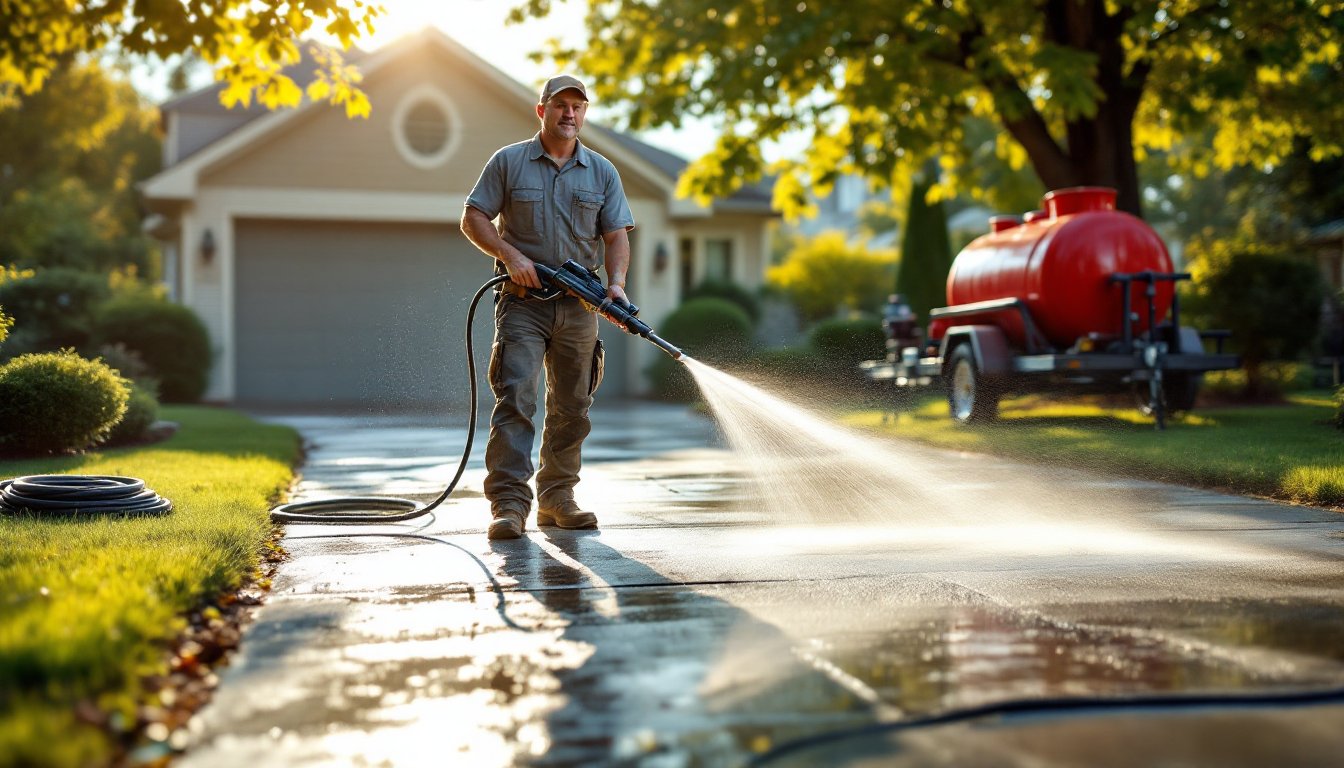
Driveway (1,000–2,000 sq. ft.): $200–$500. Standard concrete or asphalt: most jobs take 1–2 hours. If sealed or heavily stained, add $75–$150.
Deck (500–1,000 sq. ft.): $150–$400. Pressure washing can strip wood stain, so soft-washing is safer at $200–$500. Many homeowners budget for sealant reapplication afterward ($0.50–$1 per sq. ft.).
House Siding (2,000–4,000 sq. ft.): $400–$800. Vinyl or fiber-cement is standard: cedar or other specialty siding requires soft-washing and costs 20–30% more. Always clarify PSI limits with your contractor, the NEC (National Electrical Code) doesn’t apply here, but manufacturers do provide maximum PSI recommendations for each material.
Roof (1,500–3,000 sq. ft.): $300–$600. This is soft-washing only, no high-pressure equipment or you’ll dislodge shingles. Roof cleaning requires working at height and often a second pair of hands for safety: some contractors add a hazard surcharge.
Fence (100–500 linear feet): $200–$400. Wood fences take more care: aluminum or vinyl is faster. Stain removal adds cost.
Patio or Pavers (300–800 sq. ft.): $75–$300. Polymeric sand between pavers can wash out with high pressure, so pros use lower PSI and may charge a premium. Using ImproveNet’s remodeling cost guides helps you cross-check these estimates against your local market.
For multi-surface jobs (driveway, patio, and deck), contractors often bundle services and discount the total by 10–15% compared to individual quotes.