Table of Contents
ToggleDecember brings the perfect excuse to reimagine your living room as a festive retreat, a space where family gathers, memories form, and the holidays feel genuinely warm. Whether you’re decorating for the first time or refreshing last year’s setup, the key to impressive living room Christmas décor lies in thoughtful planning and layered touches that work together. This guide walks you through proven strategies for transforming your space with color schemes, focal points, lighting, and small details that make the biggest impact. You don’t need a design degree or a holiday décor budget the size of a contractor’s estimate. With intentional choices and realistic steps, your living room can showcase genuine holiday spirit.
Key Takeaways
- Choose a cohesive color palette for your living room Christmas décor with no more than three main colors to create an intentional, polished look that complements existing furniture and décor.
- Your Christmas tree serves as the room’s anchor; prioritize thoughtful styling with layered lights, garland, and ornaments over size, since a well-decorated modest tree outshines a sparse large one.
- Layer three types of lighting—ambient, task, and accent—using warm-toned LEDs and string lights to transform your living room into a genuinely festive and inviting space.
- Transform your mantel and fireplace with draped garland, stockings, and mixed textures like pinecones and ribbons, keeping focal points spaced across the surface to guide the eye.
- Expand festive impact beyond the tree by adding wreaths, wall garland, throw pillows, and decorative accents in your chosen palette throughout the room without overcrowding surfaces.
- Avoid impulse purchases by documenting your color scheme with swatches and auditing existing decorations before shopping to fill gaps strategically and build a cohesive living room Christmas look.
Plan Your Color Palette And Theme
Before hanging a single ornament, nail down your color story. A cohesive palette, whether it’s classic red and green, cool silvers and blues, warm golds and creams, or modern jewel tones, makes the entire room feel intentional rather than haphazard. Walk through your living room and note existing elements: wall color, furniture fabric, flooring, and any permanent fixtures. Your Christmas décor should complement these, not fight them.
Common palette options include:
- Classic Red & Green: Timeless and bold: pairs well with gold accents and natural wood.
- Neutral/Rustic: Whites, creams, blacks, and natural wood tones: pairs beautifully with twine and greenery.
- Blue & Silver: Cool and elegant: works especially well in modern or minimalist spaces.
- Gold & Jewel Tones: Rich emerald, deep sapphire, or burgundy paired with metallic gold creates luxury without clutter.
Stick to three colors maximum (plus neutrals). This prevents visual chaos and lets each element breathe. Once you’ve chosen your palette, document it, snap photos of swatches, paint chips, or Pinterest pins, and reference it while shopping. You’ll avoid impulse purchases that look great on the shelf but clash at home. Many decorator-grade ornaments and garlands are sold in mixed packs: audit what you already own before buying, and fill gaps strategically rather than replacing everything.
Create A Stunning Focal Point With Your Christmas Tree
Your Christmas tree anchors the room’s festive energy. Placement, size, and styling matter far more than cost: a modest tree styled thoughtfully outshines a massive one left sparse. The tree doesn’t have to be traditional, either, a small tabletop tree, a wall-mounted option, or even a stylized branch arrangement in a tall vase works if it fits your space and theme.
Tree Placement And Size Considerations
Measure your available space before shopping. A tree’s width at the base, not just its advertised height, determines how much floor space it occupies. Standard living room trees range from 5 to 7.5 feet tall, with a base diameter of 4 to 5 feet. If your room is compact or furniture is tight, a 4-foot tree or corner placement frees up traffic paths. Place your tree at least 1 foot away from walls and heat sources (fireplaces, radiators, vents), which dry out needles and increase fire risk.
Choose your tree type thoughtfully. Real trees offer fragrance and authenticity but require daily watering and annual disposal. Artificial trees are reusable and allergen-free but demand storage space. Both are legitimate choices, pick based on your household’s time, allergies, and values. For artificial trees, higher branch counts (around 800+ branches on a 6-foot tree) look fuller than sparse options.
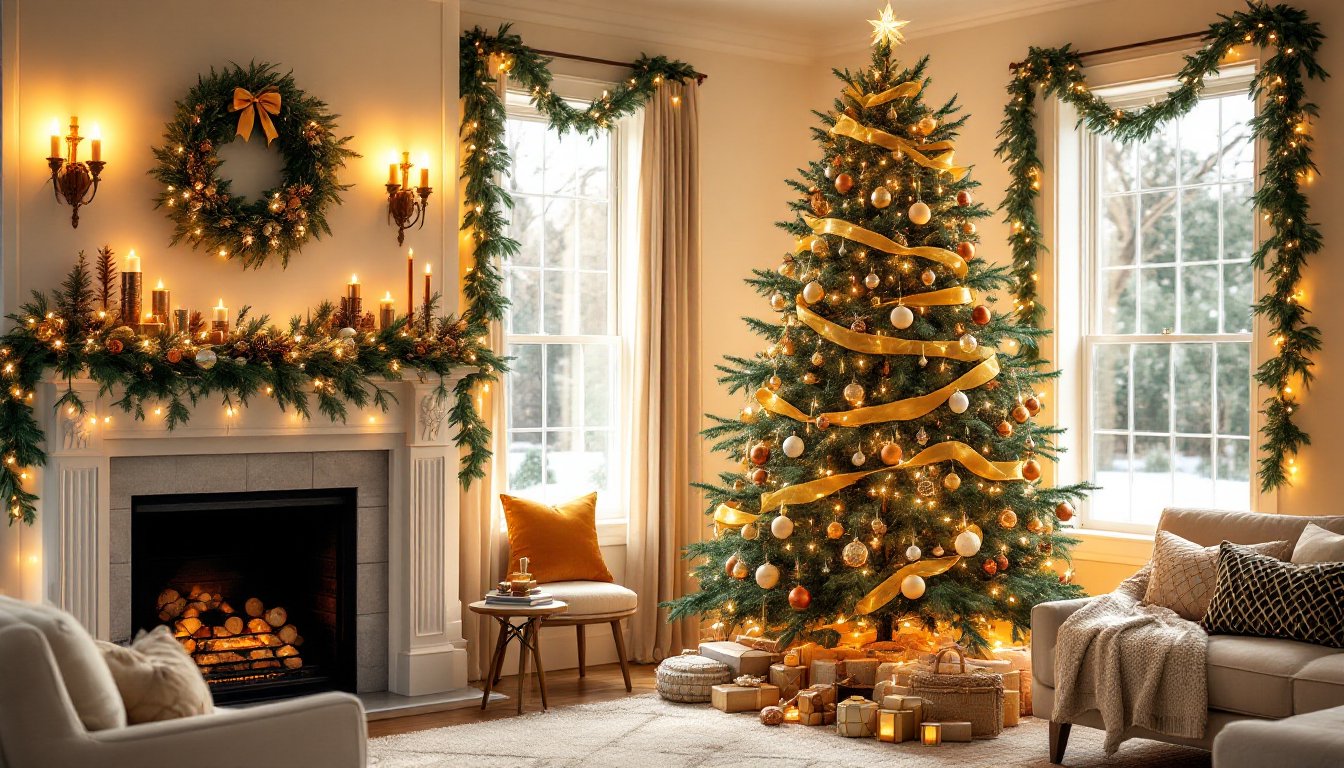
Styling the tree itself: Start with tree lights, count on roughly 100 lights per foot of height. Warm white or soft white lights feel cozier than cool blue tones unless you’re going for a modern aesthetic. String lights in concentric circles rather than stripes, it hides gaps and distributes brightness evenly. Add garland or ribbon next, draping it in loose, generous swoops rather than tight wraps. Finish with ornaments, placing larger, statement pieces toward the center and smaller ones on outer branches. Fill any remaining gaps last. The goal is intentional abundance, not bare branches peeking through.
Layer Lighting For Warmth And Ambiance
Lighting transforms mood faster than any decoration. Three layers of light, ambient, task, and accent, create depth and warmth. Start with ambient lighting: dim overhead fixtures slightly or replace bulbs with warm-toned LED options (look for 2700K color temperature on the label). This soft base prevents harsh shadows and makes the room feel inviting.
Add accent lighting through string lights, LED candles, or specialized Christmas light fixtures. Garland wrapped around doorways, windows, or mantels with embedded lights creates visual interest without clutter. Battery-operated fairy lights or warm LED strings are safer and easier than traditional plug-in cords, especially if you have small children or pets. Cluster several low-wattage light sources around your seating area to draw focus there, a lighted wreath on the wall behind a sofa, lights in a nearby bookshelf, or a string light canopy above a reading nook.
Be cautious with electrical safety. Don’t overload outlets or extension cords: one outlet per circuit is a solid rule. Check light strings for frayed wires or damaged bulbs before plugging in. If using real candles, place them on stable, heat-resistant surfaces away from curtains and paper decorations. Battery-powered candles eliminate fire risk entirely and often look convincing with flickering LED technology. The payoff for thoughtful lighting is enormous: a well-lit living room at dusk feels genuinely festive and welcomes guests warmly.
Decorate Your Fireplace And Mantel
If you have a fireplace, it’s a natural gathering point and prime decorating real estate. The mantel itself can hold garland, candles, ornaments, and personal touches: the hearth and surround offer additional styling opportunities. Start by securing garland, fresh or artificial, to the mantel edge with fishing line or removable hooks (avoid nails on finished wood). Drape it loosely with swags rather than wrapping it tightly: this looks more luxurious and easier to remove later.
Stocking And Garland Arrangements
Stockings hung from mantel hooks or commercial stocking hangers remain a cherished tradition. Arrange them evenly spaced, with heavier, filled stockings balanced by color and texture. If you don’t have a traditional mantel, stocking holders work on staircase railings, bedroom doors, or even command hooks on living room walls, they’re functional and nostalgic.
For garland itself, mix textures: pair artificial greenery with real pinecones, dried citrus slices, cinnamon sticks, or ribbons that tie back to your color palette. Garland around the fireplace surround, if you have a brick or stone surround, creates a cohesive, framed look. Space focal points (ornaments, candles, or photos in frames) along the garland so the eye travels across the mantel rather than resting on one spot. Keep larger items toward the center and smaller accents toward the ends. The mantel’s depth matters: a shallow ledge calls for small, profile items: a deeper mantel accommodates larger displays without looking crowded.
Add Festive Touches To Walls And Furniture
Doors, walls, and upholstered pieces deserve festive styling too. A wreath hung above a sofa or on a wall expands the visual impact beyond the tree and mantel. Fresh wreaths smell wonderful but demand watering: artificial wreaths last multiple seasons and pair beautifully with lights or ribbon bows. Hang wreaths at eye level, typically around 60 inches from the floor, so they feel balanced rather than floating awkwardly high.
Wall décor options abound: garland swags above windows, stockings on a decorative ladder, or a gallery wall of holiday prints and family photos mixed with festive artwork. Removable wallpaper or wall decals (holiday-themed, available at most craft stores) add pattern without commitment. Throws and cushions in your color palette, draped over the sofa or arranged on reading chairs, inject warmth and invite people to settle in comfortably.
A decorative ladder leaning in a corner displays folded blankets, garland, or stockings and works in rustic or farmhouse aesthetics. Console tables flanking the sofa or positioned near windows can showcase collections of small ornaments, candles, or greenery-filled vessels. Keep surfaces from becoming cluttered by grouping items into odd numbers (threes work well) and leaving negative space. The best holiday rooms feel generous, not suffocating. Real Christmas décor inspiration often comes from observing how light, color, and balance work in festive Christmas living room examples, giving you patterns to adapt rather than copy. Finally, consider incorporating elements from holiday home styling guides that emphasize simplicity and intentional placement. A few well-chosen pieces always outperform crowded displays.