Table of Contents
ToggleDead corners are wasted real estate. Whether you’re dealing with an awkward nook, unused wall space, or that shadowy gap next to the sofa, your living room corners hold untapped potential. A well-designed corner doesn’t just fill empty space, it adds function, visual interest, and personality to the heart of your home. From cozy reading retreats to practical storage solutions, the right living room corner ideas transform overlooked areas into your favorite spots. This guide walks you through seven actionable strategies to reclaim those corners and make them work harder for your space.
Key Takeaways
- Living room corner ideas transform overlooked spaces into functional, stylish areas by adding comfort, storage, or ambiance to unused nooks.
- A cozy reading nook requires just a comfortable chair, side table, and layered lighting—no installation needed for renters.
- Floating shelves provide practical corner storage and display when properly anchored to studs, spaced 12–15 inches apart, and filled with balanced, intentional décor.
- Corner plant walls bring life and air-purifying benefits; arrange plants at varying heights using floor planters, shelves, and hanging baskets for a layered look.
- A compact corner desk (36–48 inches wide) with proper lighting and cable management creates a focused workspace without dominating the room.
- Layered lighting combining ambient, task, and accent light sources transforms corners into atmospheric anchors and enhances the overall living room design.
Create a Cozy Reading Nook
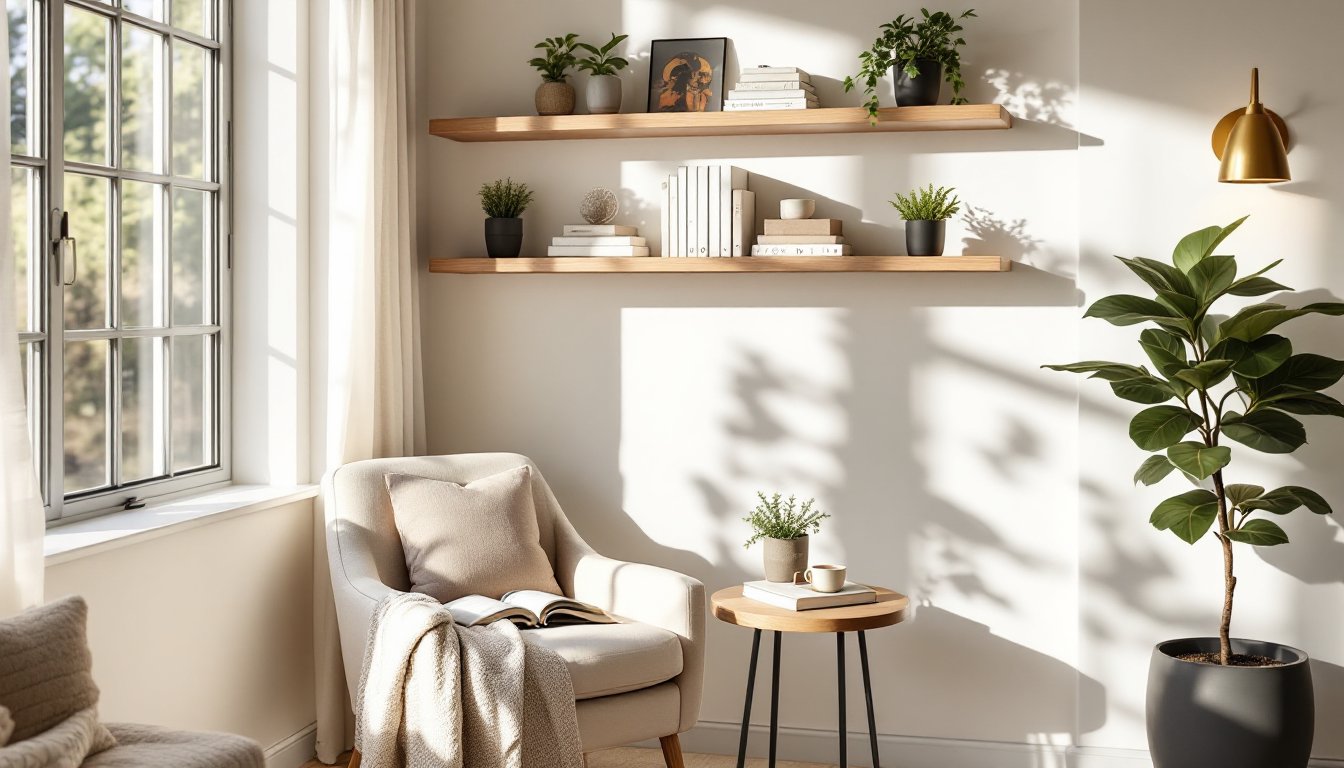
A corner reading nook is one of the simplest and most satisfying living room upgrades. Start with a comfortable chair, an accent chair or small armchair works best. Position it to face into the room or toward a window if natural light is available. Pair the chair with a small side table (18–24 inches wide) to hold a lamp, coffee, or your current read.
Layering makes the nook feel intentional. Add a floor lamp with a warm bulb behind the chair for task lighting, a throw pillow or two for comfort, and a soft throw blanket draped over the arm. A small bookshelf or wall-mounted floating shelf nearby keeps your reading material within arm’s reach without eating up floor space. Measure your corner before shopping: a standard armchair runs about 30–36 inches deep, so confirm you have the clearance before committing.
For renters or those who like to change things up, there’s no installation required, just curate the furniture and textiles. If the corner feels dark, consider layering ambient light with the floor lamp plus a small wall sconce mounted 60–72 inches from the floor. The mood you create matters as much as the function.
Install Floating Shelves for Storage and Display
Floating shelves are practical workhorses for corner storage and display. They create visual interest while keeping your floor clear. Plan your layout before drilling: typically, shelves are spaced 12–15 inches apart vertically, though this varies based on what you’re storing.
Measure twice, use a stud finder, and locate wall studs for secure mounting. Standard shelves hold 25–50 pounds per shelf depending on the bracket style and material, so don’t overload them. Use quality toggle bolts or heavy-duty anchors if studs aren’t positioned where you need them. Install shelves 12–18 inches from the corner edges to avoid visual clutter. Fill them with a mix of books, small plants, decorative boxes, and objects you actually use, this prevents the shelves from looking like a cluttered storage unit. Modern interior design emphasizes balance, so leave breathing room between items.
Material matters: wood shelves in walnut or white paint complement most living rooms. Metal and glass shelves work for industrial or contemporary spaces. If you’re not confident with wall mounting, consider freestanding corner shelving units, they’re portable and require no installation, though they do take up more footprint.
Add a Corner Plant Wall for Natural Green Space
A corner plant wall brings life, air-purifying benefits, and visual softness to your living room. Start with low-light tolerant plants if your corner doesn’t get direct sun: pothos, snake plants, ZZ plants, and peace lilies thrive in indirect light. If you have a bright corner near a window, crotons, rubber plants, and fiddle-leaf figs are stronger growers.
Arrange plants at varying heights using a combination of floor planters, wall-mounted hanging planters, and shelves. A simple approach: one tall floor plant (30–48 inches), two medium plants on shelves above it, and one or two trailing plants in hanging baskets. This creates a layered, natural look without overwhelming the space. Use planters in coordinating colors, terra cotta, white, or matte black work across most styles.
Water requirements differ by plant, so group plants with similar needs together. Check soil moisture weekly, most houseplants prefer to dry slightly between waterings. If your corner gets minimal natural light, choose shade-tolerant plants or add a simple grow light clipped to a shelf (LED strips use minimal energy and emit less heat). Rotating plants every few weeks ensures even growth and prevents them from leaning toward available light.
Set Up a Small Home Office or Workspace
A corner desk transforms an unused nook into functional workspace, essential if you’re working from home or need a focused spot for hobbies. A compact desk 36–48 inches wide fits most corners without dominating the room. Look for floating or narrow pedestal desks designed for tight spaces.
Measure the corner carefully: depth matters more than width for comfortable work. You’ll want at least 18–24 inches of depth for keyboard, mouse, and a small monitor. Position your desk perpendicular to the corner or at an angle to maximize light and avoid feeling boxed in. Ensure outlets are nearby: if not, use a power strip with surge protection and route cables along the baseboard with cable management clips.
Lighting is critical for focused work. A desk lamp with adjustable brightness ($30–80) beats relying on ceiling light alone. Mount floating shelves above the desk (12–18 inches above the work surface) for storage and organization. Keep the workspace minimal during work hours, excess items distract, but a small plant or personal object makes the corner feel human. If structural support is needed for shelving or a larger desk setup, locate wall studs and use lag bolts or heavy-duty shelf brackets rated for your expected load.
Design an Entertainment Corner with Media Storage
If your corner faces your seating area, make it an entertainment hub. A corner TV stand or media console holds your TV, gaming console, streaming device, and sound gear while keeping cables hidden. Corner units typically range from 30–60 inches wide and often include shelving or storage for equipment.
Consider cable management upfront: route all cables through conduit or clips along the wall studs before mounting the TV to avoid a tangled mess behind your furniture. For wall-mounted TVs, use an articulating wall mount rated for your TV’s weight and VESA pattern (the screw hole configuration). Always mount to studs: drywall anchors alone aren’t sufficient for TV weight. Locate studs with a stud finder, drill pilot holes, and use lag bolts or heavy-duty screws.
Storage matters for reducing clutter. Closed storage (cabinets or drawers) hides remotes, controllers, and media: open shelving displays speakers or decorative items. Sound quality benefits from proper speaker placement, so if you’re adding a sound bar or surround speakers, position them at ear level when seated. A low media console combined with corner fireplace ideas can create a warm focal point if your home has the option. Test furniture layout before final installation, TV viewing angles matter for comfort.
Use Corner Lighting to Enhance Ambiance
Lighting transforms a corner from afterthought to atmospheric anchor. Layered lighting works better than a single overhead source: combine ambient light (ceiling fixture), task light (floor or desk lamp), and accent light (wall sconce or uplighter) in one corner.
Floor lamps with fabric shades diffuse light softly and work in any rental space, no installation needed. Arc lamps add modern style while casting light over seating. Wall sconces mount 60–72 inches from the floor and require drilling, stud location, and wiring (hire a licensed electrician if you’re not confident). For non-permanent options, peel-and-stick LED strip lights (approximately $15–40) adhere to shelving or baseboards and create warm, indirect ambient light without installation.
Bulb choice matters more than most people realize. Warm white bulbs (2700K color temperature) feel cozy: cool white (4000K+) suits task areas. Dimmable smart bulbs ($10–25 each) let you adjust mood and save energy. If you’re renting and want sconce-style ambiance without wall mounting, consider table lamps with upward-facing shades that bounce light off the ceiling. MyDomaine for inspiration on how designers layer lighting across room corners to create intentional, inviting spaces.
Conclusion
Your living room corners don’t have to stay forgotten. Whether you prioritize comfort, storage, or ambiance, these seven ideas offer flexible starting points for your space. Start with one corner project, a reading nook or floating shelves, and build from there. The best corner is one that serves your daily life and reflects how you actually use your home. Measure carefully, plan your layout, and don’t skip the prep work. Small spaces yield big returns when designed with intention.