Table of Contents
ToggleA modern chandelier anchors the living room like nothing else, it’s functional task lighting, but it’s also a design statement that catches every eye when someone walks through the door. Unlike grandma’s crystal behemoth, today’s modern chandeliers run the design gamut from stripped-down minimalism to industrial geometry, and they’re a lot more practical to install and maintain. Whether you’re drawn to sleek contemporary lines or vintage industrial vibes, choosing the right modern chandelier depends on understanding what “modern” actually means in lighting design, knowing your room’s spatial constraints, and getting comfortable with the installation details so you don’t end up with a pricey fixture that doesn’t work in your space.
Key Takeaways
- A modern chandelier for your living room combines functional task lighting with bold design, featuring clean lines, honest materials, and contemporary bulb technology like LED-compatible sockets that outperform traditional designs.
- Modern chandelier styles range from minimalist and contemporary (clean, geometric forms) to industrial and mid-century modern (sculptural, statement pieces), each suited to different room aesthetics and architectural styles.
- Size your modern chandelier correctly by making its diameter roughly 25–30% of your room’s width and hanging it 8–9 feet above the floor; a 14-foot-wide room works well with a 36–42 inch fixture, while a 20-foot space needs 48–60 inches.
- Installation complexity varies: lightweight fixtures under 15 lbs with standard electrical connections are DIY-friendly, but heavier or intricate chandeliers warrant hiring a licensed electrician, especially in older homes with unfamiliar wiring.
- Modern chandeliers must connect through standardized ceiling junction box straps using color-matched wiring (black to black, white to white, bare copper to bare copper) with proper wire nuts; verify dimmer compatibility before purchase to avoid flickering or buzzing.
What Makes A Chandelier Modern
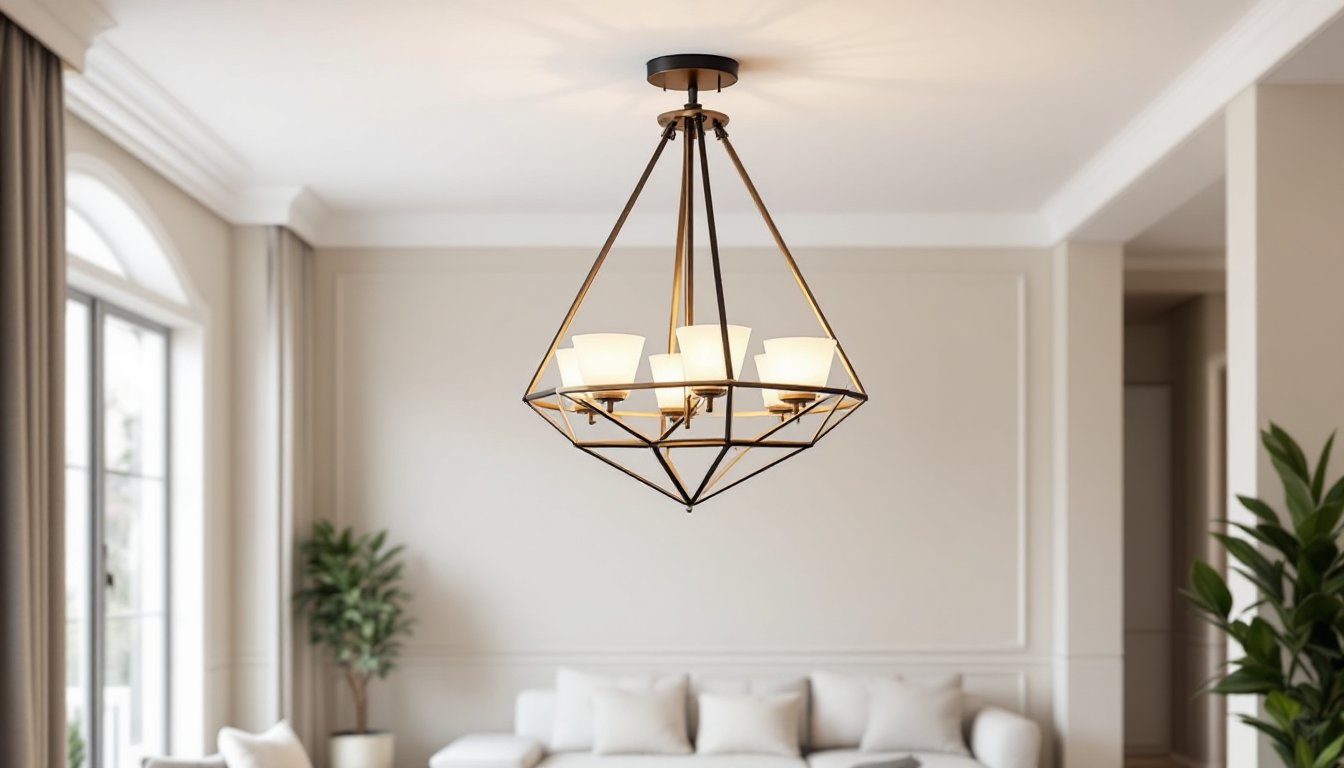
Modern chandeliers ditch the ornamental excess of traditional designs in favor of clean lines, purposeful geometry, and honest materials. A modern chandelier is usually defined by its emphasis on form over fussy detail, you see the structure, not a bunch of filigree hiding it. The fixture will typically feature metal frames (often brass, matte black, or brushed nickel), glass or metal shades, and minimized decorative elements. Most importantly, modern chandeliers prioritize function. They’re designed to actually light a room effectively, not just look pretty while barely casting light downward.
You’ll also notice modern chandeliers use contemporary bulb technology. Many are designed around LED-compatible sockets, which means lower energy draw, longer bulb life, and better heat management than incandescent designs from decades past. The fixture should accommodate standard E26 or E12 bulb bases, and compatibility with dimmer switches is increasingly common. This practicality is what separates “modern” from “vintage pretending to be modern.”
Key Design Styles And Aesthetics
Minimalist And Contemporary
Minimalist modern chandeliers strip everything down to essentials. Think a single metal ring with three or four pendant lights hanging below it, or a linear bar with evenly spaced shades, no more material than necessary. These fixtures work brilliantly in open-concept living rooms and spaces with clean architectural lines. A brushed brass or matte black finish will pair naturally with contemporary furnishings and pale or neutral wall colors. Minimalist designs are also forgiving for room scale: a well-proportioned minimal chandelier looks intentional rather than too small or undersized in various ceiling heights.
Contemporary chandeliers sometimes include a bit more personality through shape, geometric prisms, clustered orbs, or asymmetrical arrangements, while keeping the overall aesthetic uncluttered. Resources like Design Milk showcase how contemporary lighting integrates with modern interiors, revealing that the fixture’s form should complement rather than compete with the space.
Industrial And Mid-Century Modern
Industrial chandeliers embrace exposed bulbs, visible filaments, steel frames, and a handcrafted feel. Edison-style bulbs (whether LED or vintage-inspired) are a signature element. These fixtures often feature multiple arms or spokes radiating from a central hub, sometimes with a slight vintage patina to the metal. They’re at home in loft apartments, farmhouse-modern spaces, and anywhere you want a hint of vintage industrial character without actual age and repair headaches.
Mid-century modern (MCM) chandeliers are different beasts, they emphasize organic curves, sculptural forms, and often incorporate wood, brass, or teak alongside glass and metal. An MCM fixture might feature an atomic sunburst pattern or a suspended globe with angular supports. These need breathing room: they’re statement pieces that shouldn’t compete with equally bold furniture or wall treatments. Browsing home decorating and interior design ideas can help you visualize how MCM fixtures sit in actual rooms.
Choosing The Right Size And Scale
Size matters more than most people think, and getting it wrong leaves you staring at a fixture that feels either like a flyspeck or a flying saucer. A chandelier’s diameter should be roughly 25–30% of the room width and the overall height (including stem or chain) should hang so the bottom is at least 6.5 feet above the floor and ideally 8–9 feet to clear heads and sightlines comfortably. Measure your living room width in feet: a 14-foot-wide space works well with a 36–42 inch chandelier, while a 20-foot space calls for something closer to 48–60 inches.
Ceiling height changes the math. In a 9-foot ceiling, a long stem below a standard chandelier body can feel cramped: consider a flush-mount or semi-flush option instead. In a 12-foot ceiling or cathedral space, you have room for drama, a pendant-style chandelier with a longer drop creates visual interest and scale. Bulb count also signals scale: a minimalist 3-light fixture works in a more intimate room: a 6- or 9-light version fills a larger open living area. The candle-style fake-flame bulbs you see on traditional chandeliers are gone in most modern designs: instead expect exposed LED bulbs or frosted glass shades that diffuse light more evenly.
Before ordering, hold up a tape measure and mentally picture the fixture in place. A too-small chandelier vanishes: a too-large one dominates aggressively. When in doubt, lean slightly smaller, you can always layer with floor lamps and table lighting.
Installation And Safety Considerations
Modern chandeliers vary widely in installation complexity, and honestly assessing whether you’re comfortable with the job is crucial. A lightweight fixture (under 15 lbs) with a simple stem and standard electrical connections is DIY-friendly if you’re comfortable working with electricity. A heavier or more intricate fixture, especially one requiring custom stem lengths or multiple junction boxes, deserves a licensed electrician, particularly in older homes with knob-and-tube or unfamiliar wiring.
Before you touch anything: Turn off power at the breaker (not just the switch), verify the power is actually off with a non-contact voltage tester, and photograph the existing fixture’s wiring so you can match connections. Your old chandelier hung from a ceiling-mounted junction box that likely has a strap with two bolts. Modern chandeliers use the same strap mechanism, it’s standardized. The wiring itself (typically a 14/2 or 12/2 Romex cable depending on circuit amperage) connects the fixture’s black lead to the black house wire, white to white, and bare copper to bare copper, all secured with wire nuts and taped. Ensure the junction box is strong enough for the fixture’s weight: the National Electrical Code (NEC) requires boxes to support a fixture up to 50 lbs, but anything heavier may require reinforcement.
Safety absolutes: Wear safety glasses, use a helper to hold the fixture steady while you make connections, and never force a wire nut, if it doesn’t turn smoothly, the wires aren’t twisted tightly enough. The fixture body itself shouldn’t touch the electrical box directly: the strap holds weight, not the wires. If you spot any corrosion, damage, or unfamiliar wiring, stop and call a pro. Modern chandeliers like the energy-efficient models highlighted in contemporary lighting sales are designed with standard connections, but older homes and non-standard setups require expertise.
Dimmer compatibility deserves mention: not all LED bulbs work with all dimmers. Check your chandelier’s specifications, it should note “dimmable” or list compatible dimmer types. If it doesn’t, buy a smart dimmer or LED-rated dimmer separately: otherwise you’ll get flickering or buzzing. Permits? Most residential lighting fixture swaps don’t require permits, but some jurisdictions require them for any work involving electrical boxes. Call your local building department before assuming you’re clear.
Conclusion
A modern chandelier transforms your living room by anchoring the space visually and functionally. Take time to define your style preference, measure carefully for proper scale, and honestly assess whether installation fits your skill level or needs a professional. The right fixture makes the room feel intentional and complete, not because it matches a Pinterest board, but because it solves a real lighting problem while looking sharp doing it.